Magnon
Leader in renewable energy production using agroforestry biomass
A subsidiary of Ence Group and Ancala Partners, Magnon is Spain’s leading agroforestry biomass management company and a benchmark in renewable power generation from forest and agricultural biomass, managing close to 2 million tonnes of biomass every year.
The company operates eight biomass power plants across Andalusia, Castilla-La Mancha and Extremadura, with a total installed capacity of 266 MW.
Magnon also plays a key role in the decarbonisation of Spanish industry through the design, construction, operation and maintenance of renewable industrial heat projects. In addition, the company is developing Spain’s first pioneering project for the capture of biogenic CO₂ to produce the renewable fuels of the future.



Key electricity data
- 8 renewable biomass power plants.
- Close to 2 million tonnes of agri-forestry biomass managed annually.
- 266 MW of installed capacity
- Close to 1,500 GWh of energy
- 490 direct jobs and 6,000 indirect and induced jobs.
- Energy for more than one million people.
- SURE, ISO 14.001, ISO 45.000, ISO 14.064, Zero Waste and Circular Economy Strategy certifications.

Advantages of biomass energy
- Renewable energy generation, the only fully dispatchable source, independent of weather conditions (wind and sun).
- Firm and secure energy.
- Prevents wildfires and uncontrolled stubble burning, helping to reduce CO₂ emissions.
- A domestic and abundant energy resource in Spain.
- Potential for hybridisation with other renewable technologies: solar thermal and photovoltaic.
- The energy source that contributes most to rural development and employment, generating 24 jobs for every MW produced (source: APPA).
Want to know more?
Turn what were once agroforestry waste into an opportunity.
Write to us at magnon@magnon.es and we will advise you with no obligation
We are sustainable
Magnon’s biomass power plants use locally sourced biomass from the Iberian Peninsula (Spain and Portugal), primarily vine prunings, orchard pruning residues, olive pomace, olive leaves and pruning residues, cotton stalk residues, forestry by-products, maize straw and green waste.


Environmental commitment
Magnon’s activities help prevent the uncontrolled burning of agricultural and forestry residues while reducing the risk of wildfires.
The company also employs clean technologies and environmental control systems based on the Best Available Techniques (BAT) recommended by the European Union, ensuring efficient, safe and environmentally responsible operations.

Circular economy and rural development
Recovering value from biomass means creating value for rural communities.
Magnon’s activities generate skilled, long-term employment in areas affected by depopulation, strengthen the agroforestry value chain and create opportunities for farmers, transport companies and local businesses.
Working closely with local communities, Magnon promotes decentralised renewable energy models that create lasting economic and social value across the territories where it operates.

Community engagement
Magnon conducts its business according to the principles of responsible governance, transparency and continuous dialogue with all stakeholders.
The company builds long-term relationships based on trust to ensure that the energy transition is inclusive, fair and delivers lasting positive impact.
SURE Certification
Magnon holds SURE (Sustainable Resources Verification Scheme) certification, demonstrating its commitment to sustainable biomass management.
This independent certification covers biomass-based renewable electricity generation, biomass trading activities and biomass supply for renewable thermal energy production.
PEFC Certification
Magnon has implemented a Chain of Custody management system in accordance with the requirements of the PEFC ST 2002:2020 standard.
PEFC certification guarantees the traceability, legality and sustainability of certified forest biomass, ensuring that the resource can be tracked from its origin through to delivery to the customer in full compliance with PEFC requirements.
Download the PEFC Commitment Statement
Download here the PEFC Commitment Statement

Sure Certificates of Magnon’s Independent Energy Plants
Committed to people
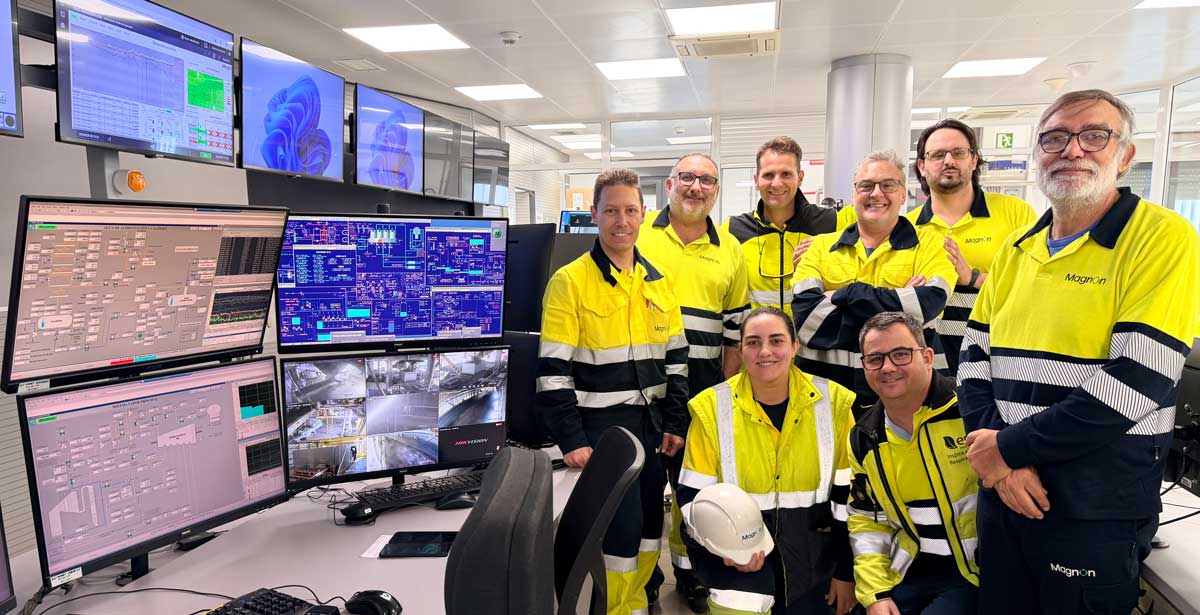
At Magnon, we believe that people are our greatest asset.
That is why we foster safe, inclusive and respectful workplaces where everyone has the opportunity to grow professionally and contribute their best.
We are committed to building relationships based on trust, recognition and continuous development, creating an environment where talent can thrive.
Thanks to this commitment, we continue to create stable, high-quality employment.
342
employees on the payroll
22%
of the team are women
36%
women in management positions