- The projects will enable Lactalis to achieve a 76% reduction in its total Scope 1 and 2 CO₂ emissions in Spain compared with the 2019 baseline year
- Magnon is the strategic partner responsible for the execution of the facilities, co-funded by the PERTE for industrial decarbonization
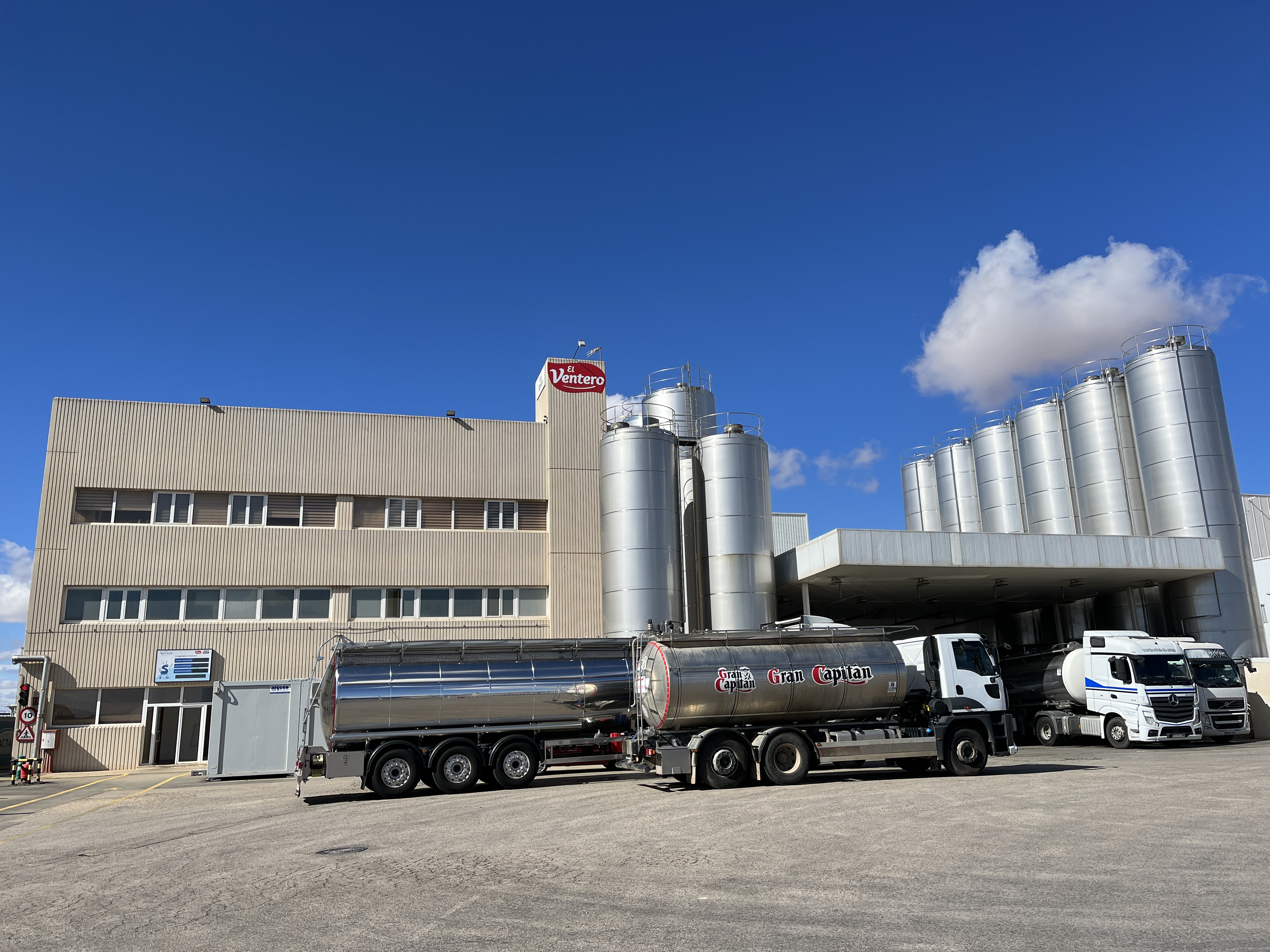
Lactalis España, the leading dairy company in Spain, together with Magnon, the country’s leading producer of renewable energy from forest and agricultural biomass, is strengthening its commitment to sustainability and the energy transition by promoting two new biomass plants at its production centres in Villarrobledo (Albacete) and Granada.
The projects, promoted by Lactalis and executed by Magnon, involve an associated investment of more than €12 million (€6.06M in Granada and €6.35M in Villarrobledo). They are partially co-funded by the Spanish Government’s Strategic Project for Economic Recovery and Transformation (PERTE) for industrial decarbonisation, and will help Lactalis achieve a 76% reduction in its total Scope 1 and 2 CO₂ emissions in Spain compared with the 2019 baseline year, accelerating its industrial decarbonisation strategy.
Each plant will be equipped with a saturated steam boiler producing 10 tonnes per hour at 16 bar(g), fuelled with certified agro-forestry biomass sourced from neighbouring areas. This technology will replace the use of natural gas with renewable thermal energy, with a generation capacity of 37,000 MWh/year in Villarrobledo and 41,000 MWh/year in Granada—around 40,000 MWh/year per plant—significantly increasing the green energy already supplied by the photovoltaic plants operating at both sites.
The biomass used in the new plants will be fully certified under European sustainability standards, ensuring traceability and carbon-neutral impact. It will be sourced from the provinces of Albacete, Granada and surrounding areas, helping reduce the logistics footprint and promoting the use of local agro-forestry resources. This proximity will not only ensure a stable supply, but also contribute directly to the economic development of rural areas, generating activity in regions traditionally linked to the primary sector.
In addition, the project includes the use of innovative technologies for the generation and efficient management of renewable thermal energy. Its design incorporates advanced solutions that ensure optimal performance, a significant reduction in emissions and minimal environmental impact. The management of by-products such as ash and slag will also follow sustainability criteria, with valorisation options such as agricultural fertiliser or alternative fuels, fully integrating circular-economy principles into daily operations.
The projects will create 20 jobs at each plant, including both direct and indirect positions, and are expected to be operational from June 2026.
“This project represents a new milestone in our industrial decarbonisation strategy in Spain. At Lactalis, we are moving forward decisively and ahead of the group’s global objectives, thanks to initiatives such as this that allow us to accelerate the energy transition at our factories. The commissioning of these biomass plants, together with other investments in renewable energy, demonstrates that we are not only meeting climate commitments, but exceeding them with vision, rigour and ambition,” said David Saliot, CEO of Lactalis Spain and Portugal.
According to Guillermo Negro, CEO of Magnon, “It is a pleasure to implement and manage this project for a company like Lactalis, a benchmark in the agri-food sector. This collaboration allows us to contribute all our knowledge and experience in sustainable energy solutions, with an industrial, efficient and locally committed approach. We are proud to help drive a real transformation of the energy model in the food industry.”
A strategic commitment by Lactalis to industrial decarbonisation
These projects, carried out in collaboration with Magnon, form part of Lactalis’s CSR roadmap, whose decarbonisation objectives have been validated by the Science Based Targets initiative (SBTi). Since 2019, the company has already reduced its Scope 1 and 2 CO₂ emissions in Spain by 69.3%, and with these new plants coming into operation the reduction will reach 76%, consolidating its progress in industrial sustainability and decarbonisation.
Magnon is firmly committed to industrial decarbonisation, offering comprehensive solutions for generating renewable thermal energy from biomass. The company has more than 20 years’ experience in biomass energy production, which in recent years it has made available to industry to provide a complete decarbonisation solution. It currently works with leading companies in the agri-food sector to decarbonise their industrial processes.
Lactalis España’s decarbonisation strategy is being developed in stages:
• First, a switch from diesel to natural gas in Granada in 2020, which reduced CO₂ emissions by 88% compared with 2019.
• Next, progress on using renewable-origin electricity: